

Setting the Stage for Jekyll & Hyde with Lighting Designer Julie Ballard
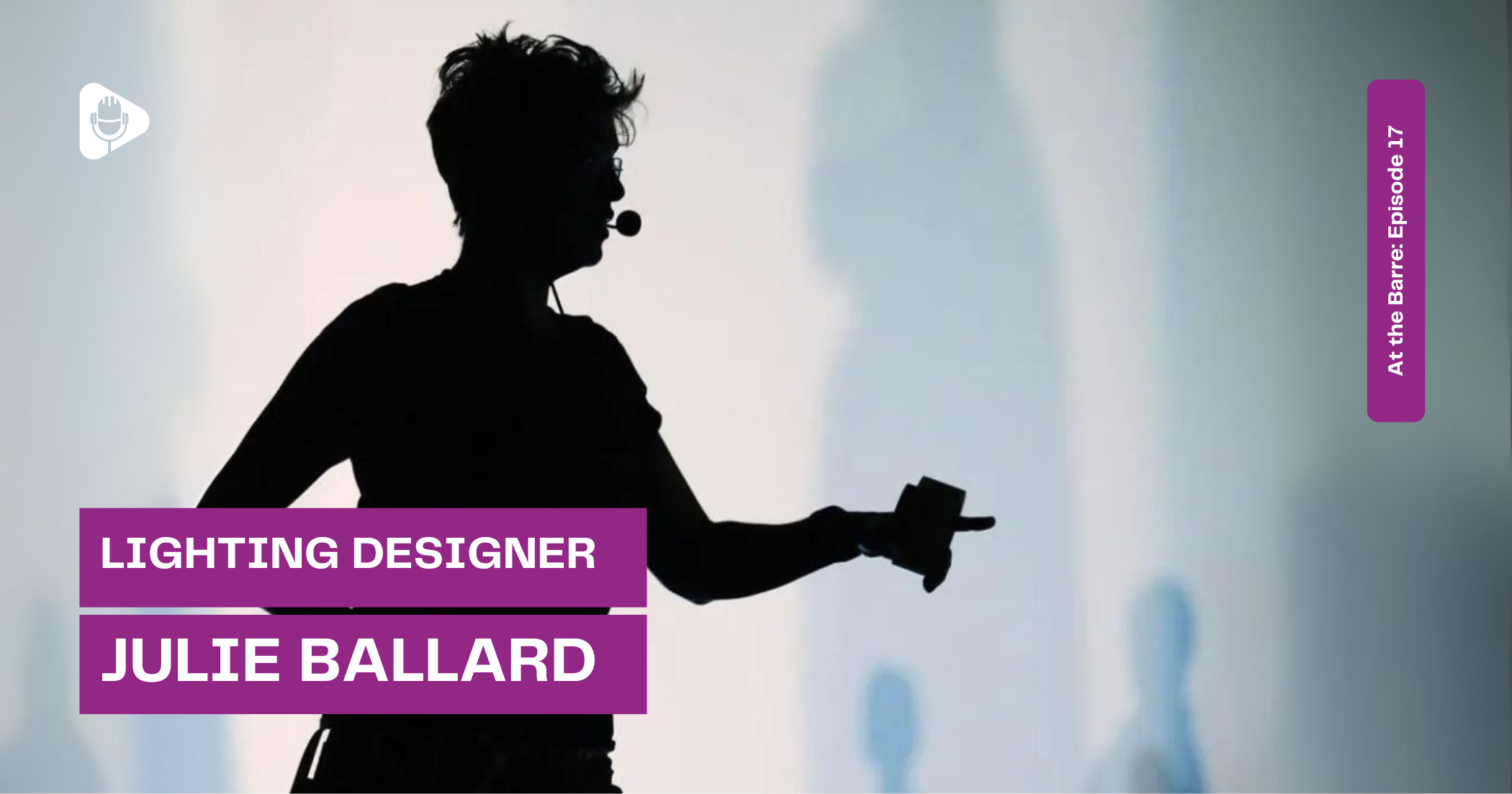
Written by Chris Fahrenthold and Caitlin Sloan
Lighting designer Julie Ballard discusses the art of illuminating dance and the collaborative process behind Madison Ballet’s upcoming production of Jekyll & Hyde.
Lighting is one of the most essential elements of a theatrical production. It shapes what audiences see, directs their attention, establishes a mood, and helps bring choreography to life. But what goes into creating the lighting for a full-length ballet, and how does a lighting designer translate a choreographer’s vision into the visual world of a production?
For Julie Ballard, lighting designer for Madison Ballet’s upcoming production of Jekyll & Hyde, the process involves a combination of artistic instinct, technical expertise, and collaboration.
With more than 25 years of experience in the field, Ballard has worked across dance and theater, including an extensive tenure with Hubbard Street Dance Chicago. For Jekyll & Hyde, she is collaborating with choreographers Ja’ Malik and Richard Walters, bringing lighting and video projections together to help tell the story.
What Makes Lighting Dance Different?
Although lighting design shares many principles across theatrical disciplines, dance presents its own distinct challenges. One of the most significant differences is how lighting shapes the audience’s perception of the moving body.
Ballard explains that traditional theater often relies heavily on front lighting to illuminate performers’ faces, allowing audiences to see and hear actors clearly. Dance, by contrast, frequently uses side lighting as its primary source of illumination.
The effect can be striking, but the technique also creates a unique challenge for performers: hitting their mark while performing athletic feats and navigating blinding lights from every direction.
After more than 25 years as a lighting designer, Ballard is still impressed by dancers’ ability to do it.
“I go on stage to focus, and I have no idea how they do it. Time after time,” she says.
For audiences, these technical choices may go largely unnoticed. But they play a crucial role in ensuring that dancers remain visible and that their movement is presented as effectively as possible.
Bringing Jekyll & Hyde to Life
Ballard first connected with Ja’ Malik when they worked together on a program at Charlotte Ballet. Their professional relationship continued to develop, eventually leading to her work with Madison Ballet.
“I was batting my eyelashes and was like, take me with you if you need a designer, and he did,” she says.
For Jekyll & Hyde, the collaboration brings a new set of challenges. Unlike a shorter contemporary ballet, the two-act, full-length production allows Ballard to develop a visual environment that evolves alongside the story.
This includes the use of projections, which will serve different purposes throughout the ballet. At times, they will help advance the narrative; at others, they will function more like scenery, establishing the environment in which the dancers perform.
“It's both,” Ballard explains. “The projections are going to, in some cases, help drive the story and in some cases just sit back and be a set piece, if you will.”
The design process is collaborative and iterative. The choreographers share an outline of their ideas, Ballard develops her own concepts, and the team continues exchanging feedback as the production takes shape.
The Relationship Between Light, Music and Movement
For Ballard, music plays a particularly important role in shaping the lighting. While the video projections may be developed more independently, the lighting design must respond to the energy and emotional character of the score.
The music helps determine the intensity, color, and focus of the light. For instance, a loud, energetic passage might call for a brighter stage, while a quiet, intimate moment may suggest dimmer, more isolated lighting.
Those decisions are not necessarily final before the dancers enter the theater. Ballard prepares as much as possible in advance, but seeing the choreography in the space is essential to refining the design.
Sometimes an image that looks promising on a computer screen does not have the intended effect on a theater’s large projection surface. Other times, changes to the choreography require adjustments to the lighting or video.
What Happens During Tech Week?
Much of a lighting designer’s work takes place before the performers ever enter the theater. By the time dancers arrive for technical rehearsals, Ballard aims to have a completed first version of the lighting design ready to go.
“I like to come in with my thoughts in a completed version one,” she explains.
That means arriving with lighting cues already prepared and timed to the choreography. During technical rehearsals, those cues can be adjusted as the team sees how the design functions in the actual performance space.
The preparation is important because programming lighting takes time. Every fixture must be instructed when and how to change.
“Unless I have been asked to create something in the moment, I try to have everything done,” Ballard says. “Because cueing takes a long time.”
Her goal is to maximize the time dancers spend in the theater, allowing them to work with the lighting rather than wait while technical adjustments are made.
But the work does not end when rehearsals finish for the day. During tech week, Ballard often returns to the theater the following morning to implement notes from the previous evening.
The process also requires close communication with other members of the production team. Lighting must complement costumes, and sometimes it is easier to change a lighting color than to alter a garment.
“Do we think it's easier for me to change the color? Or do we think it's easier for the costume designer to rebuild the whole garment? Chances are it's me,” she says.
For Ballard, the goal is to make sure each artist’s work is represented as intended.
“We're making sure that everybody is able to shine as brightly as they can,” she explains.
Collaboration Requires Trust
A successful production depends on artists being able to exchange ideas, experiment, and respond honestly to what they see. Ballard describes her relationship with choreographers as a process of offering possibilities rather than expecting every initial idea to work perfectly.
“I am happy to be part of the process,” she says. “But I didn't come up with it. So I am a piece in the puzzle that has to get set in based on what the final picture is.”
That understanding allows the creative team to refine the production without treating every adjustment as a setback.
Ballard appreciates working with collaborators who can articulate what isn't working, even if they don't know exactly how to fix it. A choreographer might identify a color that feels too saturated or a projected image that distracts from the action. Ballard can then use her technical expertise to develop an alternative.
She describes this exchange as a natural part of the process: an initial design gives the team something concrete to respond to, and each round of feedback moves the production closer to its intended vision.
That trust is especially important when a production involves several visual elements. Lighting, video, costumes, scenery, and choreography must ultimately function as parts of a unified whole.
Ultimately, the goal is for all of these elements to come together so seamlessly that audiences can focus on the story unfolding onstage. While lighting and projections may not always be the first things viewers notice, they help establish the atmosphere, heighten the emotional impact of a scene, and reveal new dimensions of the choreography. For Ballard, that is the reward of the collaborative process: finding the right visual language to support the artists onstage and help bring their vision to life.
Jekyll & Hyde opens Madison Ballet’s 45th anniversary season at the MYArts Center in Madison, Wisconsin, with a public preview on Thursday, October 29, 2026, and performances continuing through Sunday, November 1. Tickets and performance information are available at https://www.madisonballet.org/jekyll-hyde-info.